Table of Contents
- Can You Install New Flooring Over Existing Flooring?
- What Types of Existing Flooring Can Be Covered?
- Can You Install LVP Over Existing Flooring?
- Can You Install New Flooring Over Tile?
- When Should Existing Flooring Be Removed?
- Why Does the Condition of the Subfloor Matter?
- Will Installing Over Existing Flooring Raise the Floor Height?
- What Should You Check Before Installing New Flooring?
- Why Choose CRW Flooring Depot for Your Flooring Project?
- Frequently Asked Questions
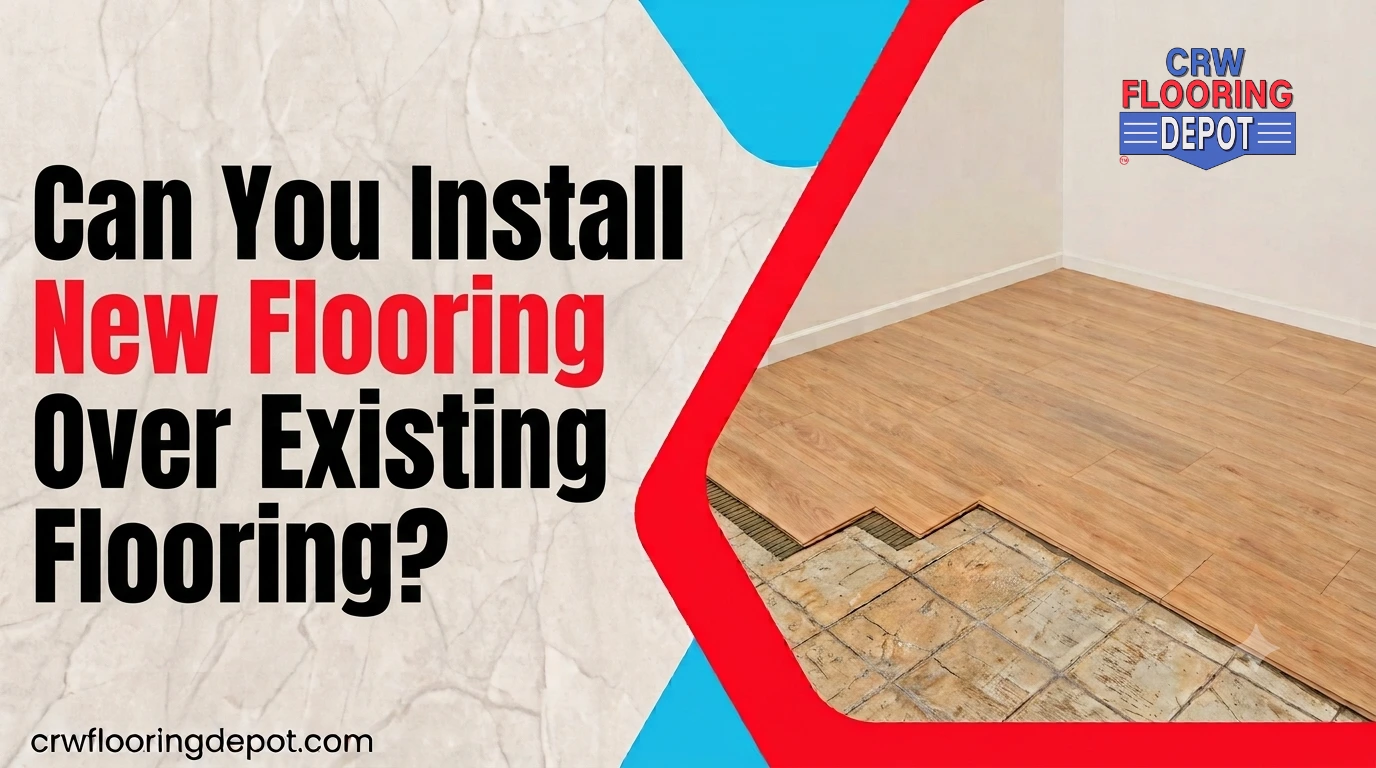
Installing new flooring doesn’t always mean removing the floor that is already there. In some situations, new flooring can be installed directly over an existing surface.
However, whether this is the right approach depends on the condition of the existing flooring, the type of new flooring, and the preparation required before installation.
So, when can you install new flooring over existing flooring, and when is removal the better option?
Can You Install New Flooring Over Existing Flooring?
Yes, in many cases, new flooring can be installed directly over an existing floor.
However, whether this is a good option depends on the type of flooring already installed, its condition, and the requirements of the new flooring material.
The existing surface should generally be clean, dry, stable, and level. Installing new flooring over a damaged or uneven surface can create problems later, even when the new flooring itself is high quality.
What Types of Existing Flooring Can Be Covered?
Certain hard flooring surfaces may be suitable for installing new flooring over them when they are in good condition.
Depending on the flooring product and installation method, these may include:
- Ceramic or porcelain tile
- Existing vinyl flooring
- Some laminate flooring
- Concrete
- Other stable hard surfaces
The important factor is not simply what the old floor is made of, but whether it provides a solid and properly prepared foundation for the new floor.
Can You Install LVP Over Existing Flooring?
In many situations, yes.
Luxury vinyl plank (LVP) is popular for renovation projects because some products can be installed over existing hard flooring.
Before installing LVP, the existing surface should be checked for uneven areas, loose flooring, moisture problems, damage, large gaps or grout lines, and changes in floor height.
Even small imperfections underneath the floor can sometimes become noticeable after installation.
Can You Install New Flooring Over Tile?
Existing tile does not always need to be removed.
If the tile is secure, level, and in good condition, certain flooring products may be installed over it after the surface has been properly prepared.
However, cracked or loose tiles should be addressed first. Deep grout lines or uneven areas may also need to be leveled before installation.
Skipping preparation simply to avoid demolition can affect the final result.
When Should Existing Flooring Be Removed?
Sometimes removing the old flooring is the better option.
Removal may be necessary when the existing floor has water or moisture damage, loose or broken material, significant unevenness, structural problems underneath, multiple existing flooring layers, or areas that are lifting or separating.
Removing damaged flooring also provides an opportunity to inspect the surface underneath before installing the new material.
Why Does the Condition of the Subfloor Matter?
Your new flooring is only as reliable as the surface supporting it.
An uneven, unstable, or moisture-damaged surface can contribute to movement, gaps, premature wear, or other installation problems.
Before beginning a flooring renovation, the surface should be evaluated for stability, moisture, cleanliness, and levelness.
Proper preparation can make a major difference in how the finished floor looks and performs.
Will Installing Over Existing Flooring Raise the Floor Height?
Yes. Installing another flooring layer can increase the overall floor height, which may affect doors, baseboards, appliances, cabinets, stair transitions, and transitions between rooms.
These details should be considered before deciding whether installing over the existing flooring is the best approach.
What Should You Check Before Installing New Flooring?
Before installing new flooring over an existing surface, consider four important factors:
- Condition: Is the current flooring damaged, loose, or cracked?
- Levelness: Is the surface flat enough for the new flooring?
- Moisture: Are there signs of moisture or previous water damage?
- Compatibility: Does the manufacturer allow the new flooring to be installed over that particular surface?
Taking the time to answer these questions can help prevent unnecessary problems later.
Why Choose CRW Flooring Depot for Your Flooring Project?
Choosing new flooring involves more than finding a color you like. The type of flooring, existing surface, installation requirements, durability, and budget all matter.
At CRW Flooring Depot, customers can explore flooring options for renovations, replacements, and new projects while getting help selecting the right material for their space.
Whether you are considering luxury vinyl plank, tile, or another flooring option, our team can help you compare products and make a more informed decision before starting your project.
Visit CRW Flooring Depot and explore our in-stock flooring options.
Thinking about replacing your floors? Visit our showroom and explore flooring options for your next project.Frequently Asked Questions
Do I always have to remove my old flooring?
No. Some flooring materials can be installed over an existing surface when that surface is stable, level, dry, and compatible with the new product.
Can LVP be installed over ceramic tile?
In many cases, yes. The tile should be firmly attached and sufficiently level, and deep grout lines or damaged areas may require preparation first.
Is it cheaper to install flooring over an existing floor?
It can reduce demolition and removal costs in some projects. However, installing over an unsuitable surface simply to save money can lead to additional expenses later.
Can I install new flooring over an uneven floor?
It can reduce demolition and removal costs in some projects. However, installing over an unsuitable surface simply to save money can lead to additional expenses later.
Should I check the flooring manufacturer’s instructions?
Yes. Installation requirements vary by product, so always follow the manufacturer’s specifications for the flooring you choose.