Table of Contents
- Can You Install Luxury Vinyl Plank Over Existing Tile?
- What Condition Must the Existing Tile Be In?
- Do Grout Lines Need to Be Filled Before Installing LVP?
- How Flat Does the Tile Floor Need to Be?
- Can Waterproof LVP Solve Moisture Problems Under Tile?
- Will Installing LVP Over Tile Raise the Floor Height?
- Do You Need Underlayment Between Tile and LVP?
- When Is It Better to Remove the Old Tile?
- Frequently Asked Questions
- Why Choose CRW Flooring Depot for Your Flooring Project?
Can You Install Luxury Vinyl Plank Over Existing Tile?
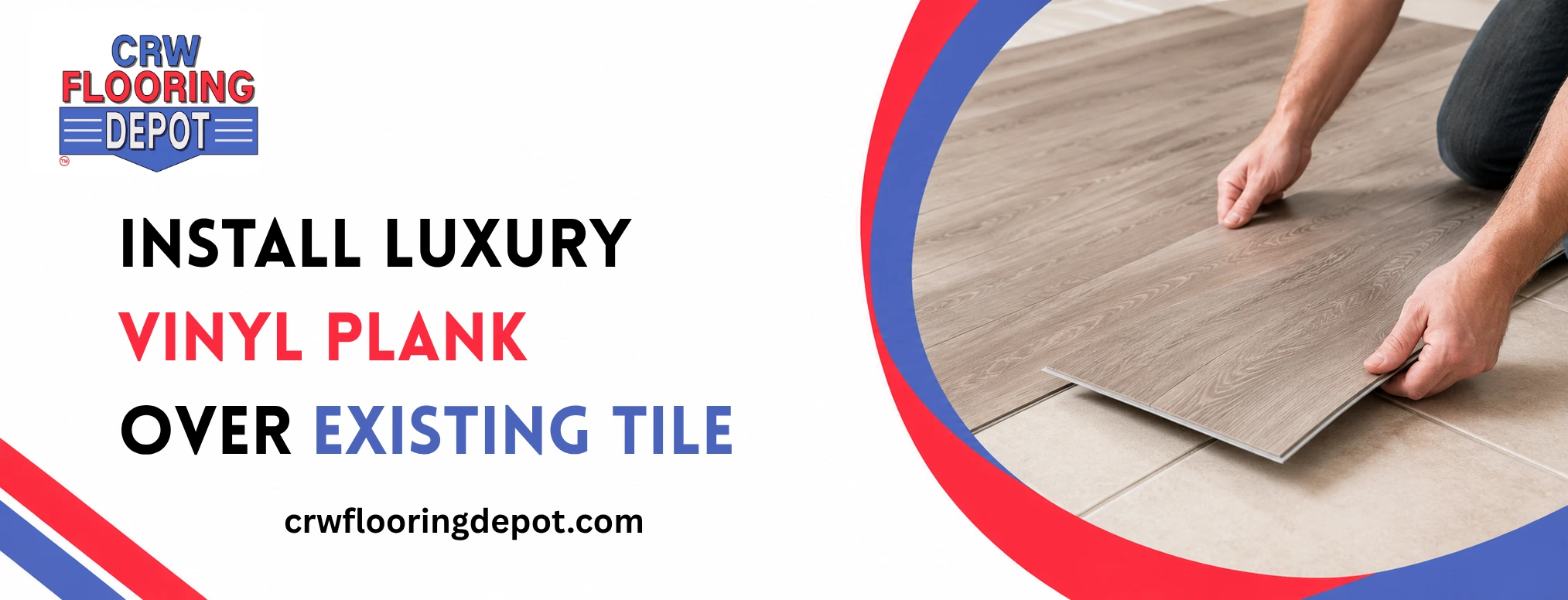
Yes, many luxury vinyl plank (LVP) products can be installed over an existing ceramic or porcelain tile floor, provided the tile is securely bonded and the surface meets the specific LVP manufacturer’s installation requirements. This approach may reduce demolition time and debris, but it is not a shortcut around necessary floor preparation. Check the installation guide for your exact product before beginning.
What Condition Must the Existing Tile Be In?
The tile must be clean, dry, sound, and firmly attached. Check for hollow-sounding, loose, broken, or moving tiles, deteriorated grout, and evidence of moisture. A loose tile can undermine the new flooring even when the LVP itself is high quality. Repair defects and investigate underlying problems rather than simply covering them.
Do Grout Lines Need to Be Filled Before Installing LVP?
They may. Deep or wide grout joints and uneven tile edges can create an unsuitable surface or eventually telegraph through some vinyl flooring. Whether filling or skim-coating is required depends on the plank construction and manufacturer’s limits for surface variation. Use a preparation compound approved for the existing tile and the new flooring system; do not assume every grout line must be filled or that none need treatment.
How Flat Does the Tile Floor Need to Be?
Flatness matters more than whether the floor is perfectly level. Measure the existing surface with a straightedge using the distances and tolerances stated in the LVP installation instructions. High spots, lippage, and low areas may need professional correction. Installing over an uneven surface can stress locking joints, create movement, or cause premature wear.
Can Waterproof LVP Solve Moisture Problems Under Tile?
No. A waterproof plank surface does not fix water intrusion, excessive substrate moisture, or a failed tile assembly. Moisture can still affect walls, adhesives, subfloors, and the overall installation. Follow product-specific moisture testing and vapor-control requirements, especially over concrete slabs and in basements. Identify and resolve the moisture source before installing.
Will Installing LVP Over Tile Raise the Floor Height?
Yes. The new planks and any approved preparation materials add height. Check door clearance, appliance openings, transitions to neighboring rooms, stair dimensions, baseboards, and thresholds before ordering. A floor that looks simple in the center of a room may require detailed planning at edges and doorways.
Do You Need Underlayment Between Tile and LVP?
Not always. Some LVP products include an attached pad, and additional underlayment may be prohibited or allowed only when specifically approved. Too much cushioning can compromise a click-lock system. Follow the product instructions for underlayment, expansion gaps, perimeter clearances, and whether the flooring is approved for installation over tile.
When Is It Better to Remove the Old Tile?
Removal may be the better choice when tiles are loose or extensively cracked, the surface is too uneven to correct economically, moisture damage is present, floor height becomes a problem, or the new flooring manufacturer does not permit installation over the existing assembly. Compare the cost of removal with the cost of repairs, leveling, and transitions before deciding.
Why Choose CRW Flooring Depot for Your Flooring Project?
Choosing the right luxury vinyl plank starts with understanding the space beneath it. At CRW Flooring Depot, homeowners and contractors in Westland and Metro Detroit can explore flooring options and discuss project needs before selecting materials. Bring your room measurements and information about the existing tile so you can ask informed questions about product compatibility and installation requirements.
Visit CRW Flooring Depot in Westland, Michigan, and explore our tile selection in person.
Your next project starts with the right flooring – and we’re here to help you find it.
Frequently Asked Questions
Can click-lock LVP go over porcelain tile?
Often yes, if the specific product permits it and the tile meets all substrate requirements.
Can LVP go over cracked tile?
Only after determining why the tile cracked and completing any repairs required by the flooring manufacturer.
Can I install LVP over tile in a kitchen?
Many products are suitable, but account for appliance clearances, spills, substrate conditions, and the installation instructions.
Can I skip floor preparation?
No. Even when demolition is unnecessary, cleaning, inspection, moisture assessment, and flatness correction may be essential.