Table of Contents
- What is quarry tile?
- Why is quarry tile a good choice for commercial flooring?
- Why is quarry tile commonly used in restaurants and commercial kitchens?
- How does quarry tile handle heavy foot traffic?
- What should businesses consider when choosing quarry tile?
- How can proper installation improve quarry tile performance?
- Frequently Asked Questions
Choosing flooring for a business is different from choosing flooring for a home. Commercial spaces often experience heavier foot traffic, more frequent cleaning, spills, equipment movement, and everyday wear.
That means the floor needs to do more than look good.
For restaurants, commercial kitchens, cafés, bakeries, retail spaces, and other high-traffic environments, quarry tile can be a practical flooring option. Its dense construction and durability have made it a familiar choice in commercial settings where performance matters.
Understanding how quarry tile works—and where it makes the most sense—can help business owners and contractors choose flooring that fits both the space and the way it will be used.
What is quarry tile?
Quarry tile is a hard, dense tile typically made from natural clay and other minerals that are formed and fired at high temperatures.
Despite its name, quarry tile is not normally cut from quarried stone. It is a manufactured tile known for its strength, simple appearance, and ability to perform in demanding environments.
Many people recognize traditional quarry tile by its red or earthy color, although available colors, sizes, textures, and finishes can vary by manufacturer.
Its practical characteristics are one reason quarry tile has been used for many years in restaurants, commercial kitchens, food-service spaces, entryways, and other areas where flooring needs to handle regular use.
Why is quarry tile a good choice for commercial flooring?
Commercial floors can experience significantly more wear than floors in an average home.
Customers and employees may walk across the same areas hundreds of times during a business day. Depending on the type of business, floors may also be exposed to carts, equipment, spills, dirt, grease, moisture, and frequent cleaning.
Quarry tile is often considered for these environments because it is dense and durable.
Instead of choosing flooring based only on appearance, businesses can consider how the material will perform during everyday operations.
A floor that is appropriate for the conditions of the space can help reduce problems caused by premature wear and make it easier to maintain a professional environment over time.
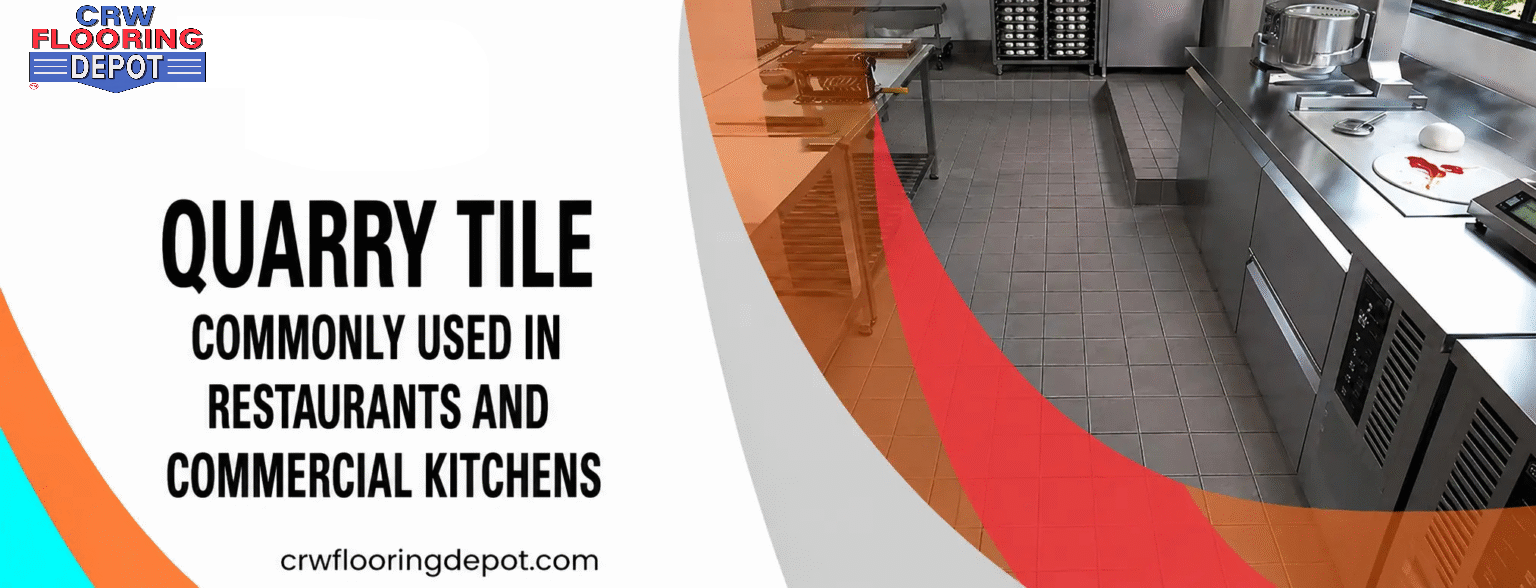
Why is quarry tile commonly used in restaurants and commercial kitchens?
Restaurants and commercial kitchens can be especially demanding environments for flooring.
Water, food, grease, cleaning products, equipment, and constant employee movement are all part of normal operations.
For that reason, flooring in these areas needs to be selected carefully.
Quarry tile has traditionally been used in many food-service environments because of its durability and ability to handle demanding conditions when the correct product and installation system are used.
Surface characteristics are also important.
In areas where spills or moisture are common, businesses should pay attention to the slip-resistance characteristics of the specific tile being considered. Not every quarry tile has the same surface or performance rating.
The flooring selected for a commercial kitchen should always be appropriate for the specific environment and comply with applicable building, health, and safety requirements.
How does quarry tile handle heavy foot traffic?
High traffic is one of the biggest concerns when choosing commercial flooring.
Entrances, service areas, kitchens, hallways, and other frequently used spaces may experience constant movement throughout the day.
Quarry tile’s dense construction can make it suitable for many high-traffic applications.
However, the tile itself is only one part of a successful commercial floor.
The condition of the substrate, installation materials, grout, layout, movement joints, and installation quality can all affect how the finished floor performs.
A durable tile combined with the correct installation system can provide a practical flooring solution for a busy commercial environment.
What should businesses consider when choosing quarry tile?
Before ordering quarry tile, start by thinking about how the space will actually be used.
- How much foot traffic will the area receive?
- Will the floor regularly be exposed to water, grease, food, dirt, or other spills?
- How frequently will it be cleaned?
- Will carts or equipment move across the floor?
- Does the area have specific slip-resistance, drainage, sanitation, or building-code requirements?
These questions can help narrow down the right product.
Tile size and surface texture should also be considered. Smaller tiles create more grout joints, while different surface finishes can affect both appearance and traction.
Grout is another important part of the decision. Commercial environments may require different grout or setting materials depending on moisture, cleaning practices, chemicals, and the conditions of the space.
Instead of treating each product separately, it is better to think about the floor as a complete system.
Read More: Reasons to Choose Quarry Tile
How can proper installation improve quarry tile performance?
Even a durable commercial tile needs to be installed correctly.
The surface underneath the tile should be stable, properly prepared, and suitable for the installation system being used.
Layout, setting materials, grout, movement accommodation, drainage, and other installation details can also affect the finished floor.
Commercial kitchens and other wet environments may have additional requirements that need to be considered before installation begins.
This is why contractors and business owners should discuss the conditions of the project before purchasing materials.
Planning these details early can help avoid selecting a product or installation system that does not match the needs of the space.
Why choose CRW Flooring Depot for your commercial flooring project?
Choosing commercial flooring is easier when you can compare materials, discuss how the space will be used, and ask questions before placing an order.
At CRW Flooring Depot, we work with homeowners, business owners, contractors, designers, and other professionals looking for flooring and tile solutions for projects throughout Michigan.
We offer tile, flooring, natural stone, countertops, cabinets, bathroom products, accessories, and more. We also provide free design services, delivery, and access to a large contractor network.
For a commercial project, the right product depends on more than appearance. Traffic, moisture, maintenance, installation conditions, and the daily demands of the business should all be considered.
With the right materials and the right information at the beginning, you can build a commercial floor designed for the way your business actually works.
If you’re planning a restaurant, commercial kitchen, retail space, or another high-traffic project, visit CRW Flooring Depot to compare your options and talk with our team.
Contact UsFrequently Asked Questions
Is quarry tile good for commercial kitchens?
Quarry tile is commonly used in commercial kitchens because it can provide a durable surface for demanding environments. The specific tile, surface, grout, setting materials, and installation system should be selected according to the conditions of the kitchen.
Is quarry tile slip-resistant?
Slip resistance depends on the specific tile and its surface characteristics. If the floor will be exposed to water, grease, or other spills, ask about the product’s slip-resistance information and whether it is suitable for the intended commercial application.
Is quarry tile only available in red?
No. Red and earthy tones are traditionally associated with quarry tile, but colors and finishes vary depending on the manufacturer and product line.
Can quarry tile handle heavy foot traffic?
Quarry tile is often selected for high-traffic environments because of its dense and durable construction. Proper installation and maintenance also play an important role in long-term performance.
Is quarry tile difficult to clean?
Routine maintenance will depend on the specific product, grout, environment, and type of soil or spills the floor encounters. Businesses should follow the manufacturer’s recommended cleaning and maintenance instructions.
Can quarry tile be used in restaurants outside the kitchen?
Yes. Depending on the desired design and performance requirements, quarry tile may also work in entryways, service areas, hallways, cafés, bakeries, and other commercial spaces.
Does quarry tile need to be sealed?
It depends on the specific product and installation. Quarry tile products can have different absorption characteristics, and grout requirements may also vary. Always check the manufacturer’s recommendations for the tile and installation system being used.